

Python实现万年历的完整代码与运行演示

发布时间:2026-10-13| 2人浏览过
本文提供了一段使用Python编写的万年历实现代码,详细展示了如何判断闰年、计算每月天数及总天数,并生成对应的日历输出。文中包含完整的源代码示例以及程序的实际运行效果截图,旨在帮助开发者理解日期处理逻辑并参考具体实现方案。
本文分享了一个使用Python语言编写的万年历程序的具体实现代码,供读者参考学习。
#coding:utf-8
def leap_year(year):#判断平瑞年
  if year%4==0 and year%100!=0 or year%400==0:
    return True
  else:
    return False
def getMonthDays(year,month):#得到每个年份每月的天数
  days = 31
  if month == 2 :
    if leap_year(year):
      days=29
    else:
      days=28
  elif month==4 or month==6 or month==9 or month==11:
    days=30
  return days

def getTotalDays(year,month):#计算星期
  totalDays=0
  for i in range(1,year):
    if leap_year(i):
      totalDays += 366
    else:
      totalDays += 365
  for i in range(1,month):
    totalDays +=getMonthDays(year,i)
  return totalDays
year=input("输入年份:")
month = input("请输入月:")
iCount = 0
print "日\t一\t二\t三\t四\t五\t六"
i=1
for i in range((getTotalDays(year,month)%7)+1):
    print '\t',
    iCount+=1
for i in range(1,getMonthDays(year,month)+1):
    print i,'\t',
    iCount +=1
    if iCount%7 == 0 :
      print ''
程序运行后的实际输出效果如下所示:
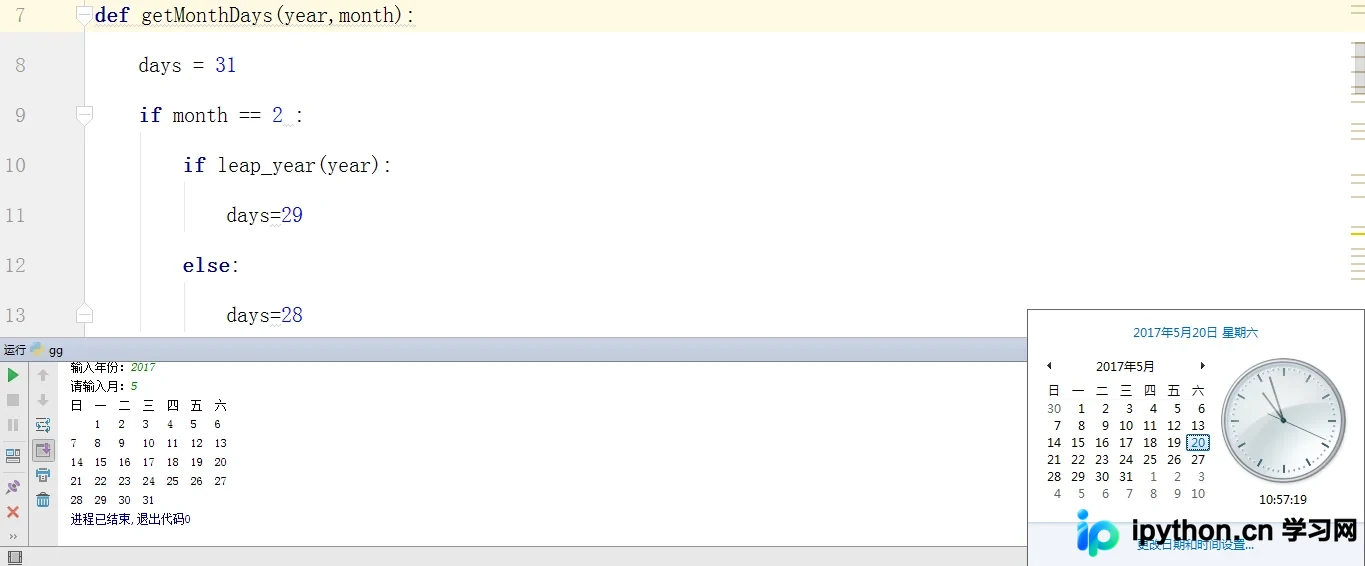
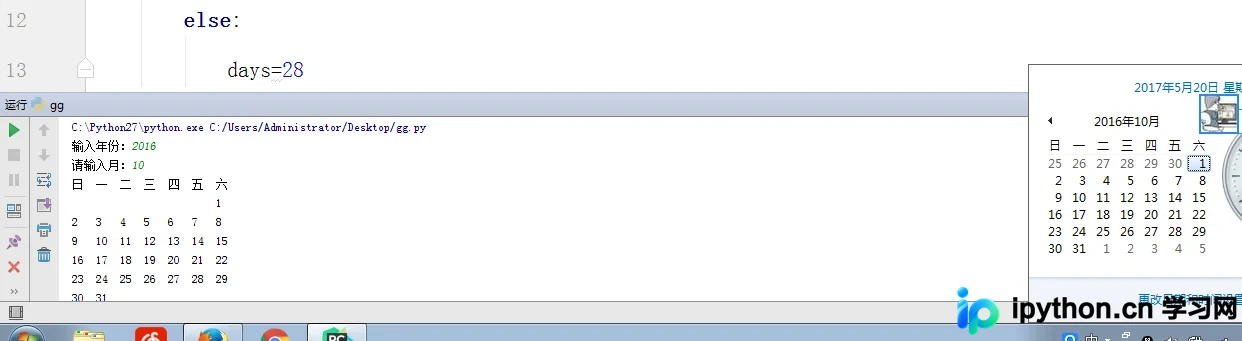
以上内容即为本文分享的全部代码与说明,希望能为读者的Python学习提供一定的帮助。欢迎大家继续支持本站获取更多技术资源。
免责声明:本文内容仅供参考,不代表本站观点。转载或引用请注明出处。









