

Python字典核心用法:创建、操作、视图与生成式详解

发布时间:2026-10-14| 5人浏览过
本文深入解析Python中字典的核心用法,涵盖使用花括号和dict()函数创建字典、通过键获取元素、执行增删改操作、获取keys/values/items视图、遍历字典以及使用字典生成式等关键技能。
引言
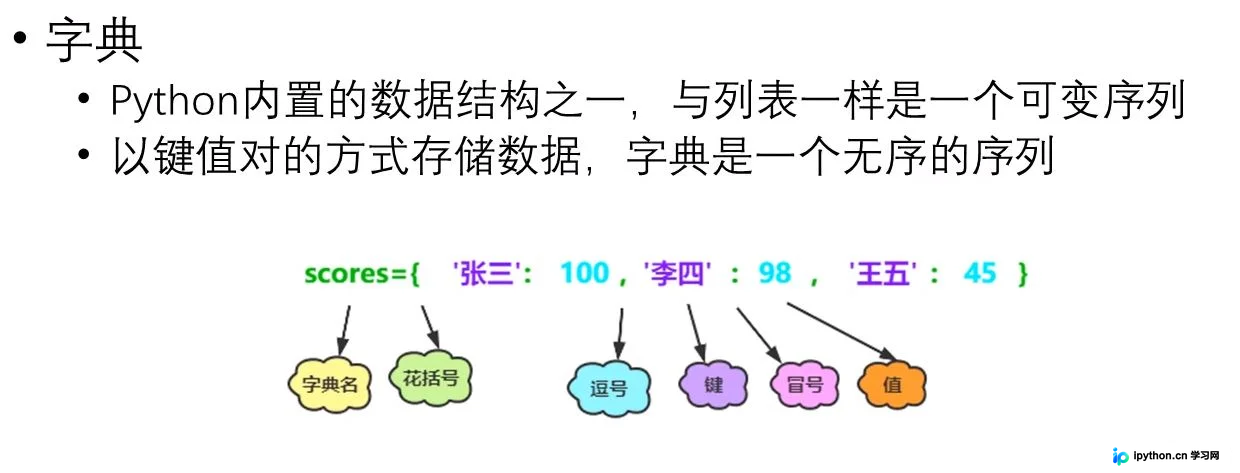
在Python中,列表和字典均属于可变序列类型,支持增加、删除、修改及排序等多种操作。
与列表不同,字典是无序的数据结构。

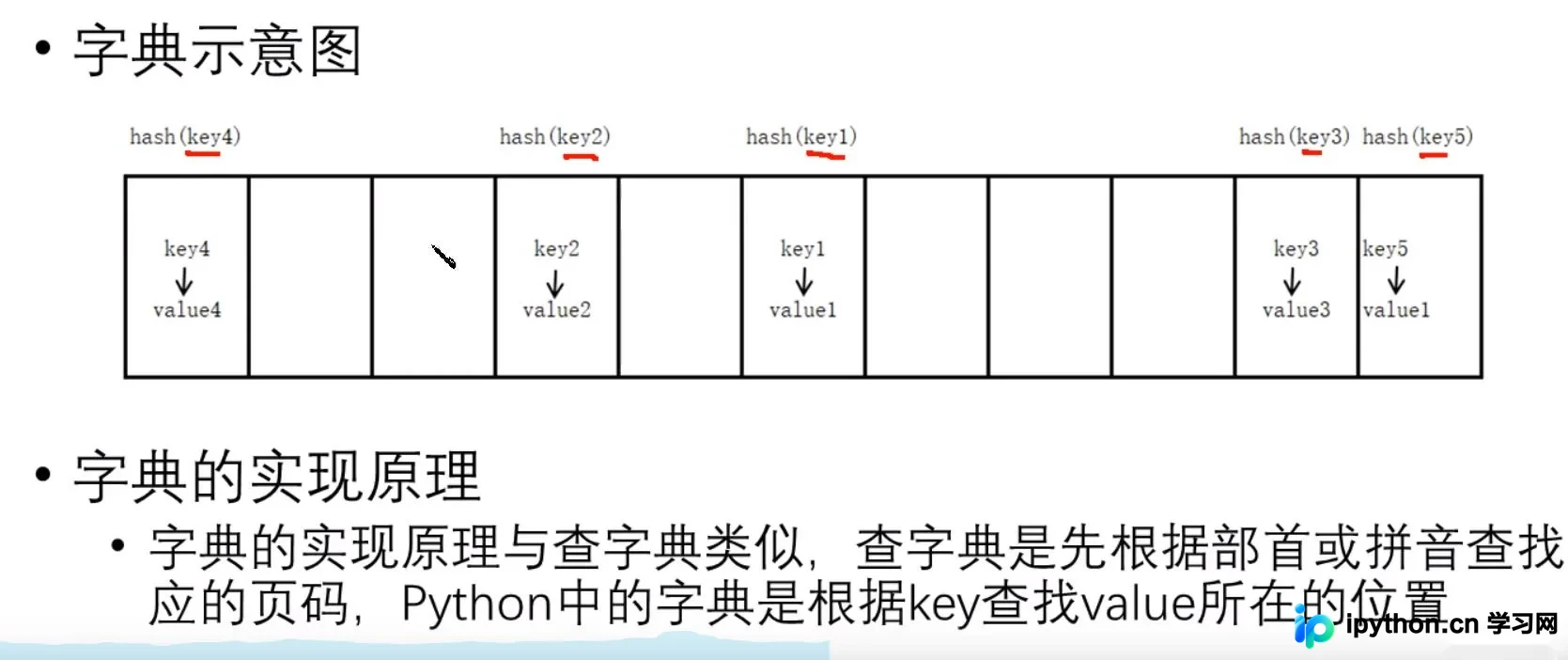
一、字典的创建
#使用{}创建
scores = {'张三':100 ,'李四':98 ,'王麻子':72}
print(scores)
print(type(scores))
#使用内置函数dict()
student = dict(name = 'jack ', age = 16)
print(student)
print(type(student))
二、字典元素的操作
(一)获取
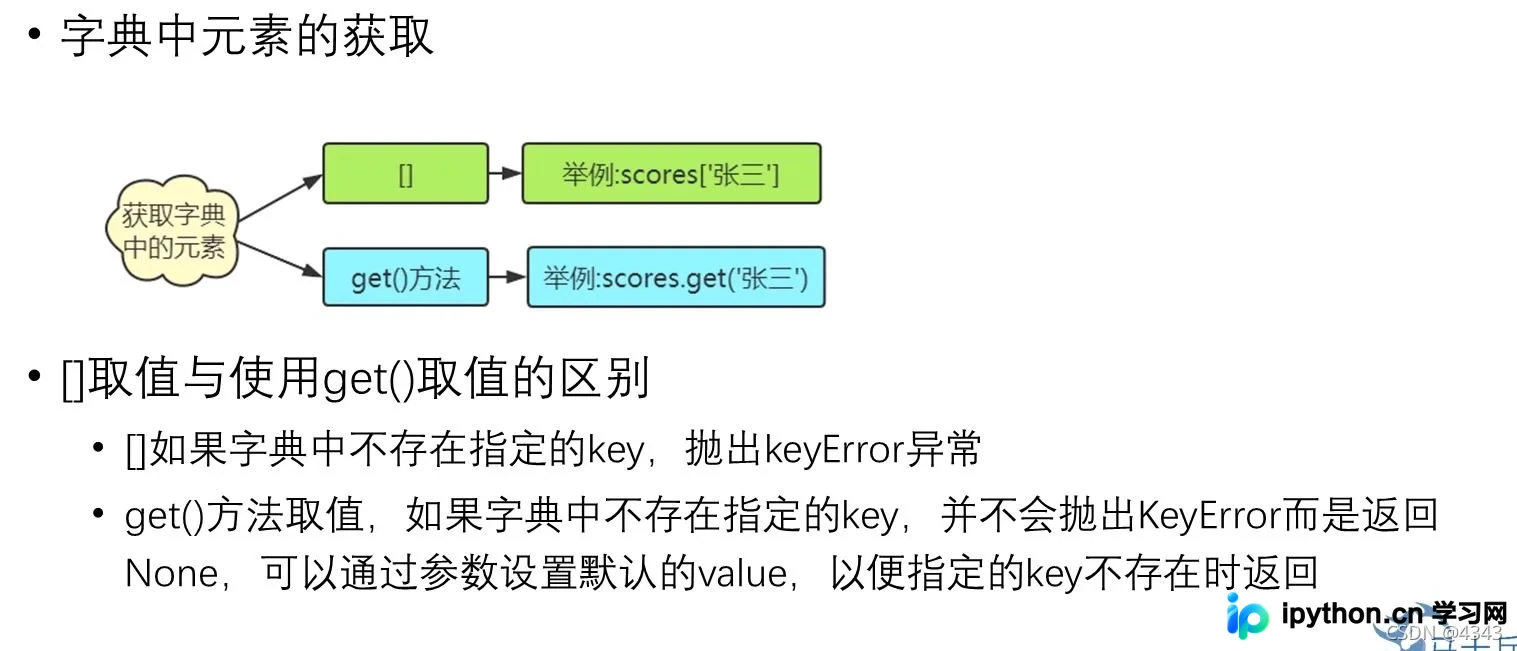
#获取字典中的元素
#方法一:
print(scores['张三'])
#方法二:
print(scores.get('张三'))
print(scores.get('66'))
#如果查找的不存在,返回none
(二)增删改
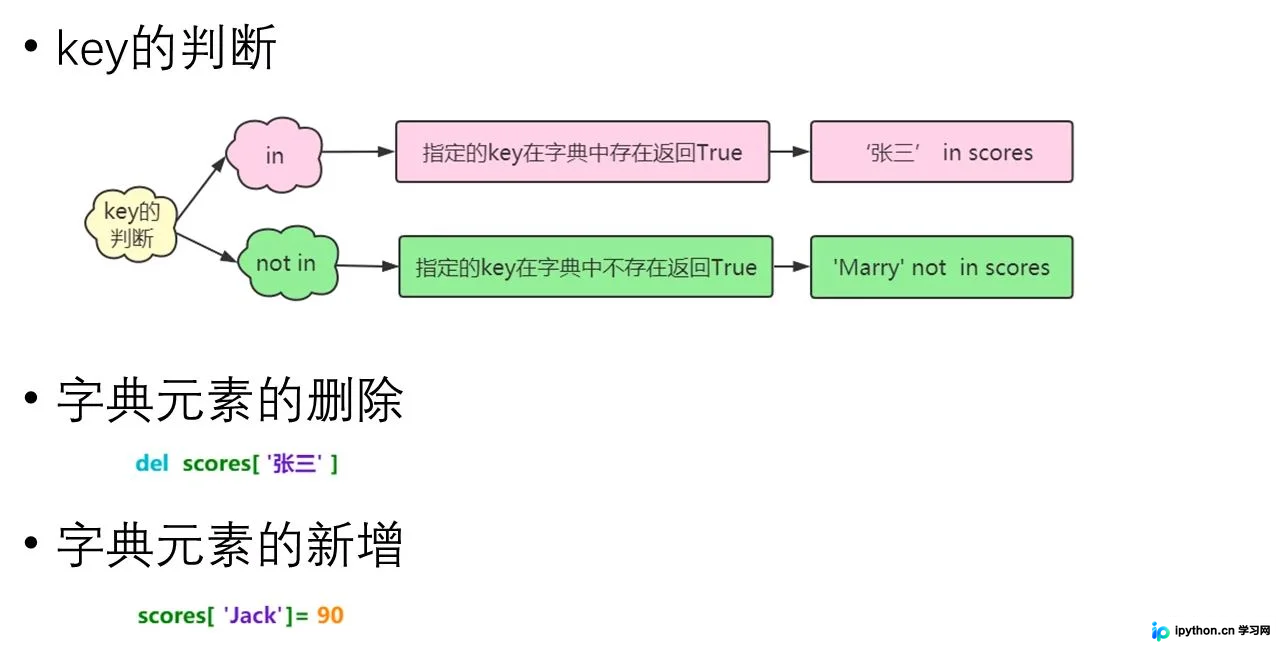
删除操作
del scores['张三'] #根据索引删除 key 和value
print(scores)
scores.clear()  #删除所有
print(scores)
新增操作(直接增加)
scores['赵四'] = 80三、获取字典的视图
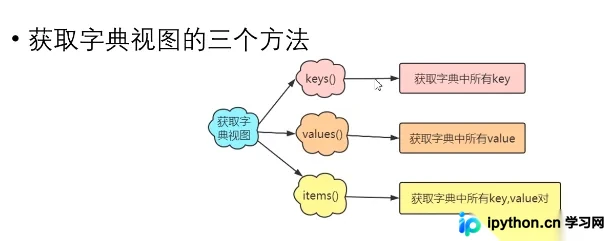
# 获取所有key值
key = scores.keys()
print(key)
print(type(key))
print(list(key)) #将key组成的视图转成list
#获取所有value值
value = scores.values()
print(value)
print(type(value))
print(list(value)) #将value组成的视图转成list
#获取所有的key-value值
items = scores.items()
print(items)
print(type(items))
print(list(items)) #转换为list后元素由元组组成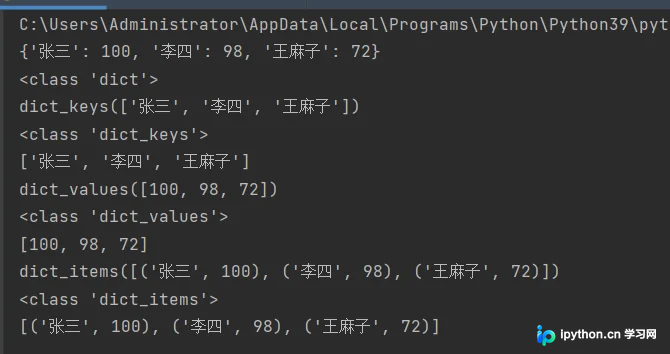
四、字典的遍历
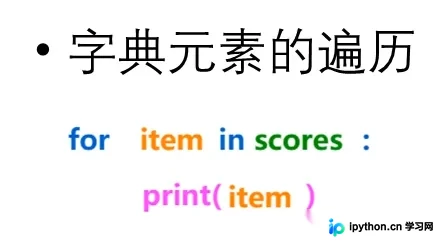
for item in scores :
    print(item,end=' ') #输出的是字典中的key
    #输出key对应的value
    print(scores[item],end=' ')
    print(scores.get(item))
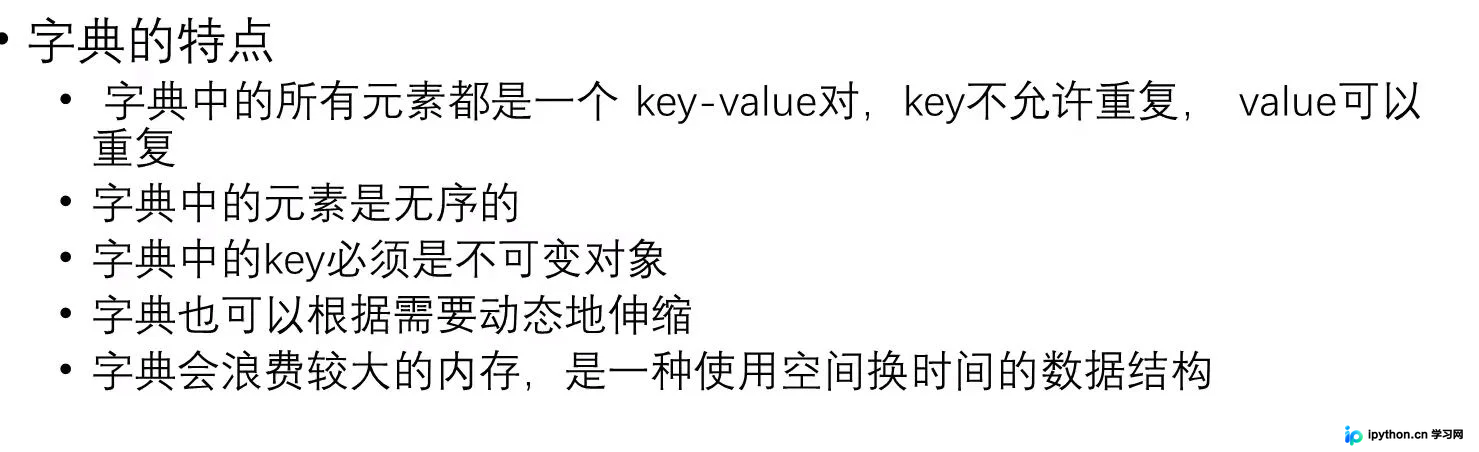
五、字典的特点
六、字典生成式
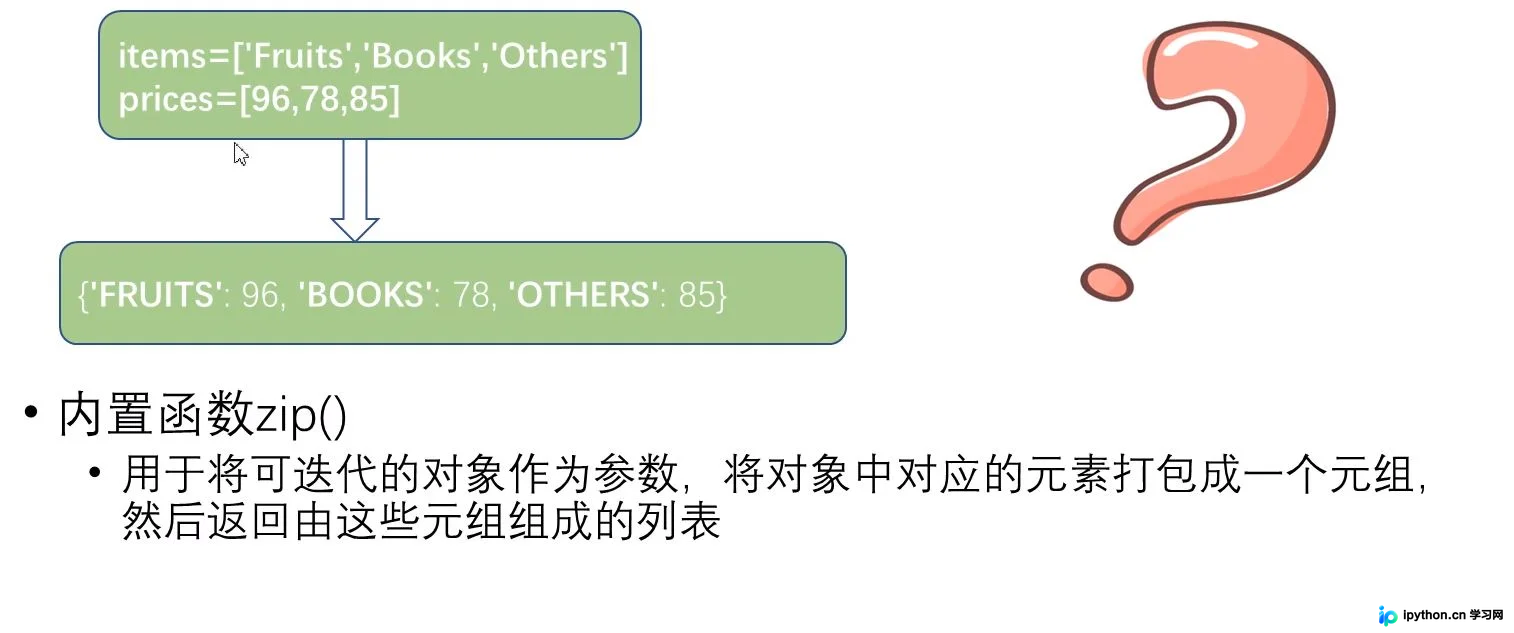
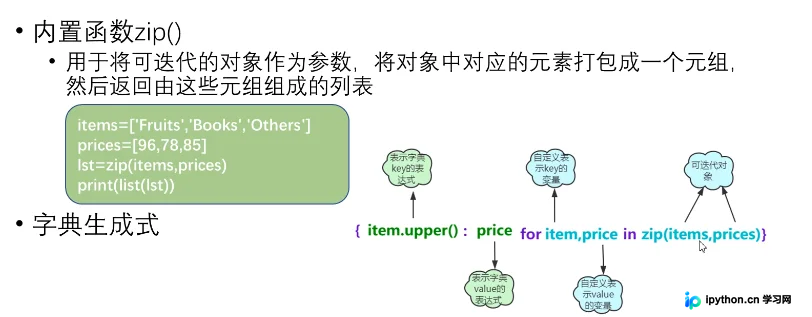
students = ['mark','sheep','jerry','tom']
grades = [100,78,60,59]
d={key:price for key,price in zip(students,grades)}
print(d)
总结
本文到此结束,希望能为读者提供帮助,同时也欢迎持续关注本站以获取更多技术内容。
引言
在Python中,列表和字典均属于可变序列类型,支持增加、删除、修改及排序等多种操作。
与列表不同,字典是无序的数据结构。
一、字典的创建
#使用{}创建
scores = {'张三':100 ,'李四':98 ,'王麻子':72}
print(scores)
print(type(scores))
#使用内置函数dict()
student = dict(name = 'jack ', age = 16)
print(student)
print(type(student))
二、字典元素的操作
(一)获取
#获取字典中的元素
#方法一:
print(scores['张三'])
#方法二:
print(scores.get('张三'))
print(scores.get('66'))
#如果查找的不存在,返回none
(二)增删改
删除操作
del scores['张三'] #根据索引删除 key 和value
print(scores)
scores.clear()  #删除所有
print(scores)
新增操作(直接增加)
scores['赵四'] = 80三、获取字典的视图
# 获取所有key值
key = scores.keys()
print(key)
print(type(key))
print(list(key)) #将key组成的视图转成list
#获取所有value值
value = scores.values()
print(value)
print(type(value))
print(list(value)) #将value组成的视图转成list
#获取所有的key-value值
items = scores.items()
print(items)
print(type(items))
print(list(items)) #转换为list后元素由元组组成
四、字典的遍历
for item in scores :
    print(item,end=' ') #输出的是字典中的key
    #输出key对应的value
    print(scores[item],end=' ')
    print(scores.get(item))
五、字典的特点
六、字典生成式
students = ['mark','sheep','jerry','tom']
grades = [100,78,60,59]
d={key:price for key,price in zip(students,grades)}
print(d)
总结
本文到此结束,希望能为读者提供帮助,同时也欢迎持续关注本站以获取更多技术内容。
免责声明:本文内容仅供参考,不代表本站观点。转载或引用请注明出处。









