

Python单向循环链表实现详解

发布时间:2026-10-13| 2人浏览过
本文详细介绍Python中单向循环链表的实现原理与核心功能。单向循环链表通过将尾节点指向头节点形成闭环,区别于普通单链表。文章提供了is_empty、length、travel等基础操作方法,并给出完整的Python代码示例,涵盖节点定义、链表初始化及增删改查等具体实现,供开发者参考学习。
本文分享一个使用Python实现的单向循环链表功能实例,供读者参考学习。
概述:
单向循环链表是在单链表基础上构建的数据结构,其特点是链表的最后一个节点不再指向空,而是指向链表的头结点,从而形成一个闭环。
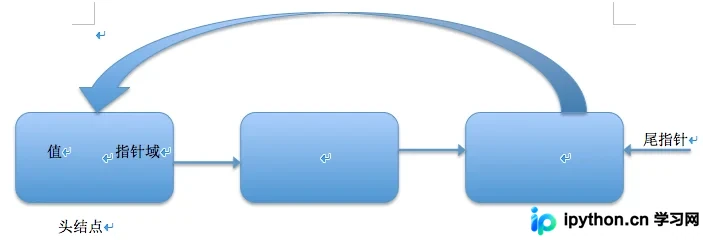
如示意图所示,单向循环链表的终止条件不再是判断节点是否为空,而是判断是否回到了表头节点。
操作:
is_empty() 用于判断链表是否为空 length() 返回链表的当前长度 travel() 遍历链表中的所有节点 add(item) 在链表头部添加一个新节点 append(item) 在链表尾部添加一个新节点 insert(pos, item) 在指定位置pos插入一个新节点 remove(item) 删除链表中第一个匹配值的节点 search(item) 检查链表中是否存在指定值的节点
具体代码实现如下:
class Node(object):
  """节点"""
  def __init__(self, item):
    self.item = item
    self.next = None
class SinCycLinkedlist(object):
  """单向循环链表"""
  def __init__(self):
    self._head = None
  def is_empty(self):
    """判断链表是否为空"""
    return self._head == None
  def length(self):
    """返回链表的长度"""
    # 如果链表为空,返回长度0
    if self.is_empty():
      return 0
    count = 1
    cur = self._head
    while cur.next != self._head:
      count += 1
      cur = cur.next
    return count
  def travel(self):
    """遍历链表"""
    if self.is_empty():
      return
    cur = self._head
    print cur.item,
    while cur.next != self._head:
      cur = cur.next
      print cur.item,
    print ""
  def add(self, item):
    """头部添加节点"""
    node = Node(item)
    if self.is_empty():
      self._head = node
      node.next = self._head
    else:
      #添加的节点指向_head
      node.next = self._head
      # 移到链表尾部,将尾部节点的next指向node
      cur = self._head
      while cur.next != self._head:
        cur = cur.next
      cur.next = node
      #_head指向添加node的
      self._head = node
  def append(self, item):
    """尾部添加节点"""
    node = Node(item)
    if self.is_empty():
      self._head = node
      node.next = self._head
    else:
      # 移到链表尾部
      cur = self._head
      while cur.next != self._head:
        cur = cur.next
      # 将尾节点指向node
      cur.next = node
      # 将node指向头节点_head
      node.next = self._head
  def insert(self, pos, item):
    """在指定位置添加节点"""
    if pos <= 0:
      self.add(item)
    elif pos > (self.length()-1):
      self.append(item)
    else:
      node = Node(item)
      cur = self._head
      count = 0
      # 移动到指定位置的前一个位置
      while count < (pos-1):
        count += 1
        cur = cur.next
      node.next = cur.next
      cur.next = node
  def remove(self, item):
    """删除一个节点"""
    # 若链表为空,则直接返回
    if self.is_empty():
      return
    # 将cur指向头节点
    cur = self._head
    pre = None
    # 若头节点的元素就是要查找的元素item
    if cur.item == item:
      # 如果链表不止一个节点
      if cur.next != self._head:
        # 先找到尾节点,将尾节点的next指向第二个节点
        while cur.next != self._head:
          cur = cur.next
        # cur指向了尾节点
        cur.next = self._head.next
        self._head = self._head.next
      else:
        # 链表只有一个节点
        self._head = None
    else:
      pre = self._head
      # 第一个节点不是要删除的
      while cur.next != self._head:
        # 找到了要删除的元素
        if cur.item == item:
          # 删除
          pre.next = cur.next
          return
        else:
          pre = cur
          cur = cur.next
      # cur 指向尾节点
      if cur.item == item:
        # 尾部删除
        pre.next = cur.next
  def search(self, item):
    """查找节点是否存在"""
    if self.is_empty():
      return False
    cur = self._head
    if cur.item == item:
      return True
    while cur.next != self._head:
      cur = cur.next
      if cur.item == item:
        return True
    return False
if __name__ == "__main__":
  ll = SinCycLinkedlist()
  ll.add(1)
  ll.add(2)
  ll.append(3)
  ll.insert(2, 4)
  ll.insert(4, 5)
  ll.insert(0, 6)
  print "length:",ll.length()
  ll.travel()
  print ll.search(3)
  print ll.search(7)
  ll.remove(1)
  print "length:",ll.length()
  ll.travel()
运行结果展示:
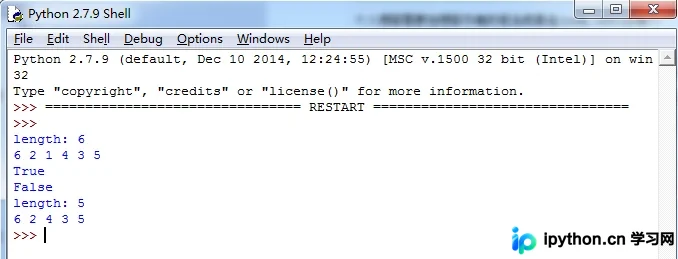
如果您对Python技术感兴趣,还可以参考本站的其他专题文章,包括《Python数据结构与算法教程》、《Python加密解密算法与技巧总结》、《Python编码操作技巧总结》、《Python函数使用技巧总结》、《Python字符串操作技巧汇总》以及《Python入门与进阶经典教程》。
希望上述内容能对您的Python程序设计工作有所帮助。
免责声明:本文内容仅供参考,不代表本站观点。转载或引用请注明出处。









